
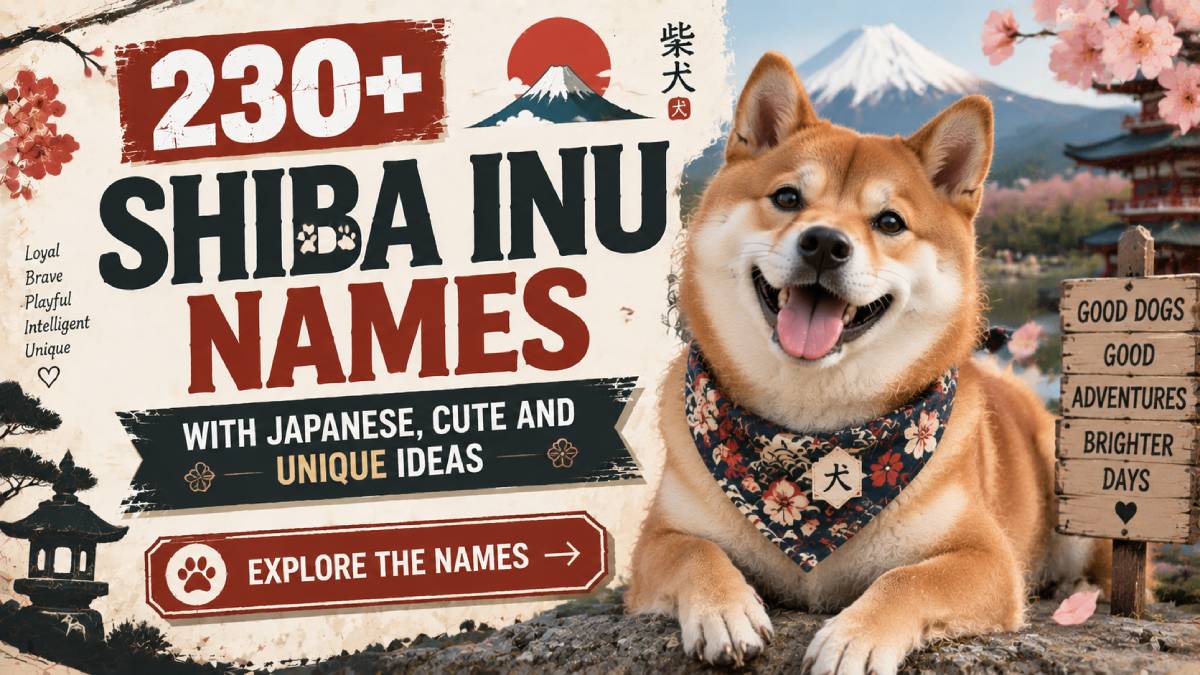
Shiba Inus combine a compact build with an alert expression and a famously self-possessed personality. Their Japanese roots make culturally grounded names an obvious place to start, but the strongest list does more than attach random translations to Japanese-looking syllables. Established given names, real words, foods, and places can all provide useful ideas as long as each type is clearly identified.
Because Japanese given names can be written with different kanji, the same spoken name may have more than one legitimate meaning. That is why the personal-name sections below focus mainly on established usage and sound, while literal vocabulary appears in its own nature section. Food, place, and coat-color ideas are separated too, making it easier to choose a Shiba Inu name for the reason that actually matters to you.
Established Japanese Girl Names for a Shiba Inu
Japanese personal names can give a Shiba Inu a direct cultural link without turning the article into a list of invented translations. Because Japanese names may be written with different kanji, a single pronunciation can have more than one legitimate meaning. The choices here are established given names, selected for clear pronunciation and everyday usability as dog names. Meanings are only mentioned where the reading is especially well documented.
- Ai — Japanese name with variable kanji meaning, smooth in conversation.
- Aiko — Established Japanese given name, practical for training.
- Aimi — Genuine Japanese personal name, practical for training.
- Aina — Japanese name with kanji-dependent meaning, practical for training.
- Airi — Real Japanese given name, practical for training.
- Akane — Culturally grounded Japanese name, practical for training.
- Akari — Japanese name with variable kanji meaning, practical for training.
- Akemi — Established Japanese given name, with a light rhythm.
- Akiko — Genuine Japanese personal name, with a light rhythm.
- Aya — Japanese name with kanji-dependent meaning, with a light rhythm.
- Ayaka — Real Japanese given name, with a light rhythm.
- Ayame — Culturally grounded Japanese name, with a light rhythm.
- Ayane — Japanese name with variable kanji meaning, with a light rhythm.
- Ayumi — Established Japanese given name, easy for families to use.
- Chie — Genuine Japanese personal name, easy for families to use.
- Chieko — Japanese name with kanji-dependent meaning, easy for families to use.
- Chika — Real Japanese given name, easy for families to use.
- Chikako — Culturally grounded Japanese name, easy for families to use.
- Chiyo — Japanese name with variable kanji meaning, easy for families to use.
- Eiko — Established Japanese given name, recognizable without being dull.
- Emi — Genuine Japanese personal name, recognizable without being dull.
- Emiko — Japanese name with kanji-dependent meaning, recognizable without being dull.
- Eri — Real Japanese given name, recognizable without being dull.
- Etsuko — Culturally grounded Japanese name, recognizable without being dull.
- Fumiko — Japanese name with variable kanji meaning, recognizable without being dull.
- Hana — Established Japanese given name, with a confident sound.
- Haruka — Genuine Japanese personal name, with a confident sound.
- Haruna — Japanese name with kanji-dependent meaning, with a confident sound.
- Hina — Real Japanese given name, with a confident sound.
- Hinata — Culturally grounded Japanese name, with a confident sound.
- Hitomi — Japanese name with variable kanji meaning, with a confident sound.
- Izumi — Established Japanese given name, gentle but memorable.
- Kaede — Genuine Japanese personal name, gentle but memorable.
- Kana — Japanese name with kanji-dependent meaning, gentle but memorable.
- Kanako — Real Japanese given name, gentle but memorable.
- Kaori — Culturally grounded Japanese name, gentle but memorable.
- Kasumi — Japanese name with variable kanji meaning, gentle but memorable.
- Keiko — Established Japanese given name, short enough for routines.
- Kiko — Genuine Japanese personal name, short enough for routines.
- Kiyoko — Japanese name with kanji-dependent meaning, short enough for routines.
Japanese Boy and Unisex Names with a Clean Call Sound
Shibas are alert, confident dogs, and many short Japanese names have the crisp rhythm that carries well across a room or yard. This group combines masculine and unisex given names rather than forcing every choice into a personality label. Several can be written with different kanji, so the sound of the name matters more here than claiming one fixed translation. That keeps the suggestions culturally grounded and practical for daily use.
- Akira — Established Japanese given name, easy to remember.
- Akihiko — Genuine Japanese personal name, easy to remember.
- Akio — Japanese name with kanji-dependent meaning, easy to remember.
- Arata — Real Japanese given name, easy to remember.
- Asahi — Culturally grounded Japanese name, easy to remember.
- Daichi — Japanese name with variable kanji meaning, easy to remember.
- Daigo — Established Japanese given name, with a neat cadence.
- Daiki — Genuine Japanese personal name, with a neat cadence.
- Daisuke — Japanese name with kanji-dependent meaning, with a neat cadence.
- Eiji — Real Japanese given name, with a neat cadence.
- Haru — Culturally grounded Japanese name, with a neat cadence.
- Haruki — Japanese name with variable kanji meaning, with a neat cadence.
- Haruto — Established Japanese given name, warm without fuss.
- Hayate — Genuine Japanese personal name, warm without fuss.
- Hayato — Japanese name with kanji-dependent meaning, warm without fuss.
- Hideo — Real Japanese given name, warm without fuss.
- Hikaru — Culturally grounded Japanese name, warm without fuss.
- Hikari — Japanese name with variable kanji meaning, warm without fuss.
- Hiro — Established Japanese given name, distinct on the ear.
- Hiroki — Genuine Japanese personal name, distinct on the ear.
- Hiroshi — Japanese name with kanji-dependent meaning, distinct on the ear.
- Hiroto — Real Japanese given name, distinct on the ear.
- Isamu — Culturally grounded Japanese name, distinct on the ear.
- Itsuki — Japanese name with variable kanji meaning, distinct on the ear.
- Jiro — Established Japanese given name, natural as a nickname.
- Jun — Genuine Japanese personal name, natural as a nickname.
- Kaito — Japanese name with kanji-dependent meaning, natural as a nickname.
- Ken — Real Japanese given name, natural as a nickname.
- Kenji — Culturally grounded Japanese name, natural as a nickname.
- Kenta — Japanese name with variable kanji meaning, natural as a nickname.
- Kiyoshi — Established Japanese given name, with an upbeat sound.
- Kota — Genuine Japanese personal name, with an upbeat sound.
- Makoto — Japanese name with kanji-dependent meaning, with an upbeat sound.
- Masaki — Real Japanese given name, with an upbeat sound.
- Masaru — Culturally grounded Japanese name, with an upbeat sound.
- Minato — Japanese name with variable kanji meaning, with an upbeat sound.
- Naoki — Established Japanese given name, clear at a distance.
- Riku — Genuine Japanese personal name, clear at a distance.
- Ryo — Japanese name with kanji-dependent meaning, clear at a distance.
- Satoshi — Real Japanese given name, clear at a distance.
More Japanese Given Names with Distinctive Style
A longer list is useful when you want a Japanese name that feels less obvious than the handful seen on every pet-name page. These are real Japanese given names or established name forms, not random syllable combinations. Some feel classic, some modern, and some are comfortably unisex. As with other Japanese names, kanji can change the exact meaning, so the notes stay focused on use and sound unless a meaning is straightforward.
- Shiro — Japanese name with variable kanji meaning, clean in daily use.
- Sota — Established Japanese given name, bright and memorable.
- Souta — Genuine Japanese personal name, bright and memorable.
- Taichi — Japanese name with kanji-dependent meaning, bright and memorable.
- Takashi — Real Japanese given name, bright and memorable.
- Taro — Culturally grounded Japanese name, bright and memorable.
- Yoshi — Japanese name with variable kanji meaning, bright and memorable.
- Yuki — Established Japanese given name, soft but distinct.
- Yuma — Genuine Japanese personal name, soft but distinct.
- Yuto — Japanese name with kanji-dependent meaning, soft but distinct.
- Ren — Real Japanese given name, soft but distinct.
- Rei — Culturally grounded Japanese name, soft but distinct.
- Rin — Japanese name with variable kanji meaning, soft but distinct.
- Rina — Established Japanese given name, compact and clear.
- Sakura — Genuine Japanese personal name, compact and clear.
- Saki — Japanese name with kanji-dependent meaning, compact and clear.
- Mei — Real Japanese given name, compact and clear.
- Megumi — Culturally grounded Japanese name, compact and clear.
- Michiko — Japanese name with variable kanji meaning, compact and clear.
- Mika — Established Japanese given name, friendly in sound.
- Miki — Genuine Japanese personal name, friendly in sound.
- Miyu — Japanese name with kanji-dependent meaning, friendly in sound.
- Natsuki — Real Japanese given name, friendly in sound.
- Natsumi — Culturally grounded Japanese name, friendly in sound.
- Naomi — Japanese name with variable kanji meaning, friendly in sound.
- Yui — Established Japanese given name, good for everyday calling.
- Yoko — Genuine Japanese personal name, good for everyday calling.
- Yuri — Japanese name with kanji-dependent meaning, good for everyday calling.
- Rumi — Real Japanese given name, good for everyday calling.
- Yoshiko — Culturally grounded Japanese name, good for everyday calling.
Japanese Nature and Word Names for Shibas
Nature words suit the Shiba’s foxlike look and outdoorsy history, but they should be treated as words or theme-inspired pet names rather than automatically as human given names. This section mixes clear Japanese vocabulary with a few established names that also carry natural imagery. The labels are kept literal where possible, so a word for cloud stays a cloud word and a flower reference is not stretched into an unrelated personality meaning.
- Sora — Japanese word or name associated with sky, kept as a literal nature reference.
- Hoshi — Japanese word or name associated with star, kept as a literal nature reference.
- Tsuki — Japanese word or name associated with moon, kept as a literal nature reference.
- Umi — Japanese word or name associated with sea, kept as a literal nature reference.
- Kaze — Japanese word or name associated with wind, kept as a literal nature reference.
- Mori — Japanese word or name associated with forest, kept as a literal nature reference.
- Yama — Japanese word or name associated with mountain, kept as a literal nature reference.
- Kawa — Japanese word or name associated with river, kept as a literal nature reference.
- Momo — Japanese word or name associated with peach, kept as a literal nature reference.
- Kumo — Japanese word or name associated with cloud, kept as a literal nature reference.
- Aki — Japanese word or name associated with autumn, kept as a literal nature reference.
- Natsu — Japanese word or name associated with summer, kept as a literal nature reference.
- Fuyu — Japanese word or name associated with winter, kept as a literal nature reference.
- Ao — Japanese word or name associated with blue or green, kept as a literal nature reference.
- Aoi — Japanese word or name associated with hollyhock, blue, or green depending on kanji, kept as a literal nature reference.
- Midori — Japanese word or name associated with green, kept as a literal nature reference.
- Kuro — Japanese word or name associated with black, kept as a literal nature reference.
- Gin — Japanese word or name associated with silver, kept as a literal nature reference.
- Kin — Japanese word or name associated with gold, kept as a literal nature reference.
- Aka — Japanese word or name associated with red, kept as a literal nature reference.
- Momiji — Japanese word or name associated with autumn leaves or maple foliage, kept as a literal nature reference.
- Kiku — Japanese word or name associated with chrysanthemum, kept as a literal nature reference.
- Ume — Japanese word or name associated with Japanese plum, kept as a literal nature reference.
- Take — Japanese word or name associated with bamboo, kept as a literal nature reference.
- Sugi — Japanese word or name associated with cedar, kept as a literal nature reference.
- Tsubaki — Japanese word or name associated with camellia, kept as a literal nature reference.
- Sumire — Japanese word or name associated with violet, kept as a literal nature reference.
- Botan — Japanese word or name associated with peony, kept as a literal nature reference.
- Renge — Japanese word or name associated with lotus or Chinese milk vetch depending on usage, kept as a literal nature reference.
- Hotaru — Japanese word or name associated with firefly, kept as a literal nature reference.
Japanese Food-Inspired Shiba Inu Names
Food-inspired names can be especially cute on a compact, expressive Shiba. These choices come from recognizable Japanese dishes, ingredients, sweets, and drinks. They are not presented as personal-name meanings; they are simply cultural references that work as playful pet nicknames. Short options such as Miso, Nori, and Yuzu are easy to call, while longer choices can be shortened naturally if you prefer a punchier everyday nickname.
- Miso — Recognizable Japanese food reference, with a lively rhythm.
- Tofu — Japanese culinary nickname, with a lively rhythm.
- Matcha — Familiar Japanese dish or ingredient, with a lively rhythm.
- Yuzu — Distinctive food-inspired nickname, with a lively rhythm.
- Udon — Clear Japanese food reference, with a lively rhythm.
- Soba — Playful Japanese culinary reference, with a lively rhythm.
- Ramen — Recognizable Japanese food reference, simple to pronounce.
- Nori — Japanese culinary nickname, simple to pronounce.
- Bento — Familiar Japanese dish or ingredient, simple to pronounce.
- Onigiri — Distinctive food-inspired nickname, simple to pronounce.
- Dango — Clear Japanese food reference, simple to pronounce.
- Anko — Playful Japanese culinary reference, simple to pronounce.
- Azuki — Recognizable Japanese food reference, easy to remember.
- Kinako — Japanese culinary nickname, easy to remember.
- Mikan — Familiar Japanese dish or ingredient, easy to remember.
- Kuri — Distinctive food-inspired nickname, easy to remember.
- Sencha — Clear Japanese food reference, easy to remember.
- Genmaicha — Playful Japanese culinary reference, easy to remember.
- Wasabi — Recognizable Japanese food reference, with a neat cadence.
- Shiso — Japanese culinary nickname, with a neat cadence.
- Daikon — Familiar Japanese dish or ingredient, with a neat cadence.
- Edamame — Distinctive food-inspired nickname, with a neat cadence.
- Gyoza — Clear Japanese food reference, with a neat cadence.
- Tempura — Playful Japanese culinary reference, with a neat cadence.
- Sukiyaki — Recognizable Japanese food reference, warm without fuss.
- Teriyaki — Japanese culinary nickname, warm without fuss.
- Yakitori — Familiar Japanese dish or ingredient, warm without fuss.
- Okonomiyaki — Distinctive food-inspired nickname, warm without fuss.
- Takoyaki — Clear Japanese food reference, warm without fuss.
- Taiyaki — Playful Japanese culinary reference, warm without fuss.
Japan Place Names That Work as Dog Names
A place-inspired dog name can nod to Japan without pretending the word has a hidden meaning. Cities, districts, islands, mountain areas, and travel destinations offer plenty of recognizable options with very different sounds. Some are compact and energetic, while others feel more unusual. This group works well for owners who have a personal connection to Japan, a favorite destination, or simply like geographic names with a clear real-world reference.
- Kyoto — Recognizable Japanese destination, playful without excess.
- Nara — Location-inspired Japanese choice, playful without excess.
- Kobe — Japanese place reference, playful without excess.
- Osaka — Real Japanese place name, polished but practical.
- Sapporo — Geographic Japan reference, polished but practical.
- Nikko — Recognizable Japanese destination, polished but practical.
- Hakone — Location-inspired Japanese choice, polished but practical.
- Kamakura — Japanese place reference, polished but practical.
- Nagano — Real Japanese place name, with a strong rhythm.
- Aomori — Geographic Japan reference, with a strong rhythm.
- Akita — Recognizable Japanese destination, with a strong rhythm.
- Sendai — Location-inspired Japanese choice, with a strong rhythm.
- Kanazawa — Japanese place reference, with a strong rhythm.
- Nagoya — Real Japanese place name, easy to say twice.
- Shibuya — Geographic Japan reference, easy to say twice.
- Ginza — Recognizable Japanese destination, easy to say twice.
- Ueno — Location-inspired Japanese choice, easy to say twice.
- Asakusa — Japanese place reference, easy to say twice.
- Odaiba — Real Japanese place name, with a crisp call.
- Fuji — Geographic Japan reference, with a crisp call.
- Hokkaido — Recognizable Japanese destination, with a crisp call.
- Okinawa — Location-inspired Japanese choice, with a crisp call.
- Miyajima — Japanese place reference, with a crisp call.
- Beppu — Real Japanese place name, easy to repeat.
- Takayama — Geographic Japan reference, easy to repeat.
Red, Sesame and Warm-Coat Shiba Names
Red and red-sesame coats are strongly associated with the Shiba Inu, so color-inspired names are a practical way to reflect appearance without making false etymology claims. These are English color, spice, plant, and warm-toned word names. They are intentionally separated from the Japanese-language sections above. That distinction keeps a coat-based nickname such as Russet or Paprika from being misrepresented as a traditional Japanese personal name.
- Sesame — Warm color or spice reference, easy to say twice.
- Sienna — Warm-toned coat name, with a crisp call.
- Russet — English color-inspired choice, with a crisp call.
- Tawny — Rich warm-shade reference, with a crisp call.
- Copper — Clear coat-based nickname, with a crisp call.
- Auburn — Warm color or spice reference, with a crisp call.
- Ginger — Warm-toned coat name, easy to repeat.
- Paprika — English color-inspired choice, easy to repeat.
- Cayenne — Rich warm-shade reference, easy to repeat.
- Umber — Clear coat-based nickname, easy to repeat.
- Henna — Warm color or spice reference, easy to repeat.
- Brick — Warm-toned coat name, clean in daily use.
- Ochre — English color-inspired choice, clean in daily use.
- Persimmon — Rich warm-shade reference, clean in daily use.
- Apricot — Clear coat-based nickname, clean in daily use.
- Marigold — Warm color or spice reference, clean in daily use.
- Sunset — Warm-toned coat name, bright and memorable.
- Flame — English color-inspired choice, bright and memorable.
- Fox — Rich warm-shade reference, bright and memorable.
- Vixen — Clear coat-based nickname, bright and memorable.
Japanese Names with Strong, Spirited Energy
The last set returns to established Japanese names with a slightly bolder sound. Shibas are known for independence, alertness, and a confident presence, so a compact name with firm consonants can suit the breed nicely. These options are not claimed to mean brave, fierce, or loyal unless the source meaning truly supports it. The emphasis is on sound, cultural authenticity, and how naturally the name works in everyday dog training.
- Kazuki — Japanese name with variable kanji meaning, easy to remember.
- Kazuo — Established Japanese given name, with a neat cadence.
- Nobu — Genuine Japanese personal name, with a neat cadence.
- Noboru — Japanese name with kanji-dependent meaning, with a neat cadence.
- Osamu — Real Japanese given name, with a neat cadence.
- Saburo — Culturally grounded Japanese name, with a neat cadence.
- Sho — Japanese name with variable kanji meaning, with a neat cadence.
- Toshiro — Established Japanese given name, warm without fuss.
- Yamato — Genuine Japanese personal name, warm without fuss.
- Yoshio — Japanese name with kanji-dependent meaning, warm without fuss.
- Maru — Real Japanese given name, warm without fuss.
- Goro — Culturally grounded Japanese name, warm without fuss.
- Katsu — Japanese name with variable kanji meaning, warm without fuss.
- Toshi — Established Japanese given name, distinct on the ear.
- Yori — Genuine Japanese personal name, distinct on the ear.
A Japanese personal name, a favorite place, a food nickname, or a warm coat-color word can all suit a Shiba for different reasons. Keeping those categories honest makes it much easier to choose a name you can use with confidence.