
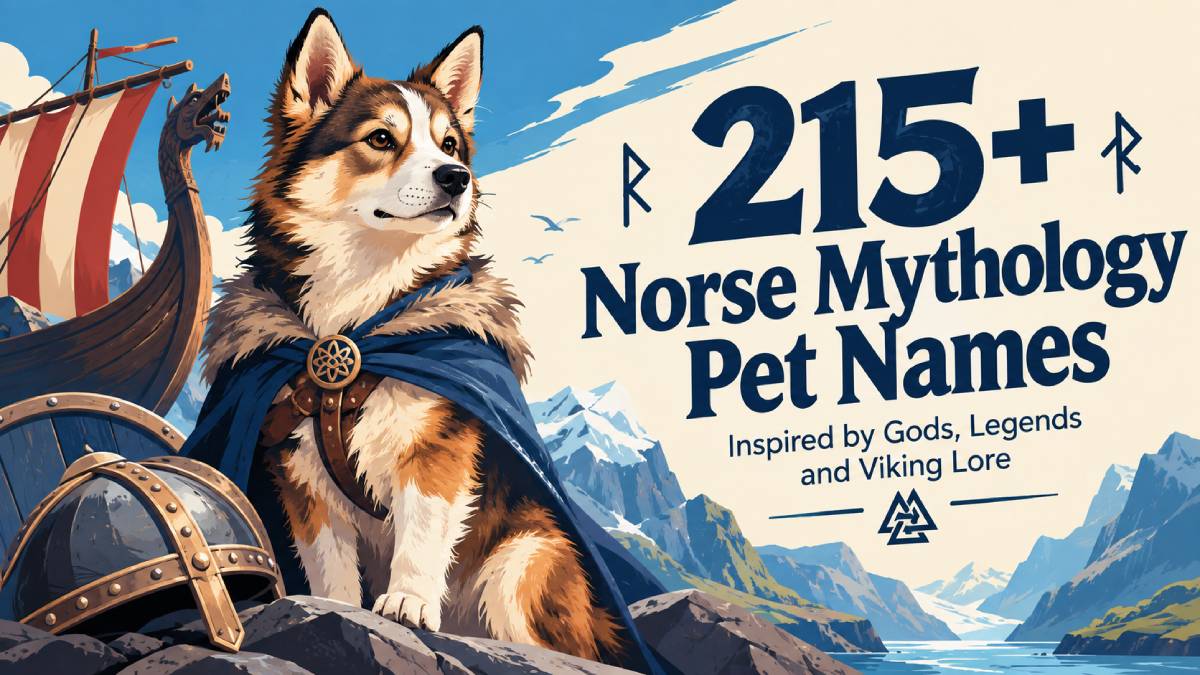
Norse mythology pet names can come from gods, giants, legendary animals, dwarfs, valkyries, saga heroes, realms and famous mythic objects. Keeping those categories separate makes the references clearer and avoids turning every Old Norse word into a supposed personal name.
The collection uses documented figures and terms from Norse myth and related heroic tradition rather than invented Viking-sounding compounds. Familiar English spellings are used where practical, while the descriptions focus on the source category instead of forcing uncertain etymologies.
Gods and Goddesses of the Norse Pantheon
Norse mythology includes the better-known Æsir as well as Vanir deities and other divine figures preserved in Old Norse tradition. Odin, Thor, Freyja and Freyr are among the most familiar, but the pantheon is much broader. These names are presented as mythological references rather than reduced to one-word personality meanings.
- Odin — Odin feels Norse; saying Odin remains memorable without invented meaning.
- Thor — Thor sounds memorable; calling Thor preserves the mythic association.
- Baldr — Baldr reads old-world; using Baldr is easy to explain to other people.
- Hodr — Hodr lands legendary; repeating Hodr stays distinct in a long list.
- Heimdall — Heimdall has a mythic tone; hearing Heimdall keeps the cultural link visible.
- Tyr — With a dramatic sound, Tyr works through story rather than translation.
- Bragi — Bragi brings a story-rich note and remains usable beyond the theme.
- Vidar — Vidar stays historic; choosing Vidar keeps the source recognizable.
- Vali — Vali feels heritage-linked; saying Vali stays pronounceable in daily use.
- Forseti — Forseti sounds distinctive; calling Forseti works as a clear pet-name reference.
- Ullr — Ullr reads Norse; using Ullr remains memorable without invented meaning.
- Loki — Loki lands memorable; repeating Loki preserves the mythic association.
- Njord — Njord has a old-world tone; hearing Njord is easy to explain to other people.
- Freyr — With a legendary sound, Freyr stays distinct in a long list.
- Freyja — Freyja brings a mythic note and keeps the cultural link visible.
- Frigg — Frigg stays dramatic; choosing Frigg works through story rather than translation.
- Sif — Sif feels story-rich; saying Sif remains usable beyond the theme.
- Idunn — Idunn sounds historic; calling Idunn keeps the source recognizable.
- Skadi — Skadi reads heritage-linked; using Skadi stays pronounceable in daily use.
- Nanna — Nanna lands distinctive; repeating Nanna works as a clear pet-name reference.
- Gefjon — Gefjon has a Norse tone; hearing Gefjon remains memorable without invented meaning.
- Eir — With a memorable sound, Eir preserves the mythic association.
- Fulla — Fulla brings a old-world note and is easy to explain to other people.
- Gna — Gna stays legendary; choosing Gna stays distinct in a long list.
- Hlin — Hlin feels mythic; saying Hlin keeps the cultural link visible.
- Syn — Syn sounds dramatic; calling Syn works through story rather than translation.
- Saga — Saga reads story-rich; using Saga remains usable beyond the theme.
- Sjofn — Sjofn lands historic; repeating Sjofn keeps the source recognizable.
- Lofn — Lofn has a heritage-linked tone; hearing Lofn stays pronounceable in daily use.
- Var — With a distinctive sound, Var works as a clear pet-name reference.
- Vor — Vor brings a Norse note and remains memorable without invented meaning.
- Jord — Jord stays memorable; choosing Jord preserves the mythic association.
- Sol — Sol feels old-world; saying Sol is easy to explain to other people.
- Mani — Mani sounds legendary; calling Mani stays distinct in a long list.
- Dellingr — Dellingr reads mythic; using Dellingr keeps the cultural link visible.
- Nott — Nott lands dramatic; repeating Nott works through story rather than translation.
- Kvasir — Kvasir has a story-rich tone; hearing Kvasir remains usable beyond the theme.
- Hoenir — With a historic sound, Hoenir keeps the source recognizable.
- Mimir — Mimir brings a heritage-linked note and stays pronounceable in daily use.
- Ve — Ve stays distinctive; choosing Ve works as a clear pet-name reference.
- Vili — Vili feels Norse; saying Vili remains memorable without invented meaning.
- Hermod — Hermod sounds memorable; calling Hermod preserves the mythic association.
- Meili — Meili reads old-world; using Meili is easy to explain to other people.
Giants, Jotnar and Other Mythic Figures
The jötnar and related mythic beings are central to many Norse stories, appearing as rivals, relatives, spouses and allies of the gods. Their roles differ greatly, so a name is included because of its place in the mythology rather than because every giant supposedly represents strength or danger. This keeps the cultural reference accurate.
- Ymir — Ymir lands legendary; repeating Ymir stays distinct in a long list.
- Aegir — Aegir has a mythic tone; hearing Aegir keeps the cultural link visible.
- Ran — With a dramatic sound, Ran works through story rather than translation.
- Gerdr — Gerdr brings a story-rich note and remains usable beyond the theme.
- Gymir — Gymir stays historic; choosing Gymir keeps the source recognizable.
- Angrboda — Angrboda feels heritage-linked; saying Angrboda stays pronounceable in daily use.
- Thjazi — Thjazi sounds distinctive; calling Thjazi works as a clear pet-name reference.
- Suttungr — Suttungr reads Norse; using Suttungr remains memorable without invented meaning.
- Gunnlod — Gunnlod lands memorable; repeating Gunnlod preserves the mythic association.
- Hrungnir — Hrungnir has a old-world tone; hearing Hrungnir is easy to explain to other people.
- Hymir — With a legendary sound, Hymir stays distinct in a long list.
- Geirrod — Geirrod brings a mythic note and keeps the cultural link visible.
- UtgardLoki — UtgardLoki stays dramatic; choosing UtgardLoki works through story rather than translation.
- Skrymir — Skrymir feels story-rich; saying Skrymir remains usable beyond the theme.
- Thrym — Thrym sounds historic; calling Thrym keeps the source recognizable.
- Gjalp — Gjalp reads heritage-linked; using Gjalp stays pronounceable in daily use.
- Greip — Greip lands distinctive; repeating Greip works as a clear pet-name reference.
- Farbauti — Farbauti has a Norse tone; hearing Farbauti remains memorable without invented meaning.
- Laufey — With a memorable sound, Laufey preserves the mythic association.
- Bergelmir — Bergelmir brings a old-world note and is easy to explain to other people.
- Bolthorn — Bolthorn stays legendary; choosing Bolthorn stays distinct in a long list.
- Bestla — Bestla feels mythic; saying Bestla keeps the cultural link visible.
- Baugi — Baugi sounds dramatic; calling Baugi works through story rather than translation.
- Billingr — Billingr reads story-rich; using Billingr remains usable beyond the theme.
- Vafthrudnir — Vafthrudnir lands historic; repeating Vafthrudnir keeps the source recognizable.
- Sinmara — Sinmara has a heritage-linked tone; hearing Sinmara stays pronounceable in daily use.
- Surtr — With a distinctive sound, Surtr works as a clear pet-name reference.
- Beli — Beli brings a Norse note and remains memorable without invented meaning.
- Hyrrokkin — Hyrrokkin stays memorable; choosing Hyrrokkin preserves the mythic association.
- Gridr — Gridr feels old-world; saying Gridr is easy to explain to other people.
- Jarnsaxa — Jarnsaxa sounds legendary; calling Jarnsaxa stays distinct in a long list.
- Hyndla — Hyndla reads mythic; using Hyndla keeps the cultural link visible.
- Fenja — Fenja lands dramatic; repeating Fenja works through story rather than translation.
- Menja — Menja has a story-rich tone; hearing Menja remains usable beyond the theme.
- Groa — With a historic sound, Groa keeps the source recognizable.
- Alvaldi — Alvaldi brings a heritage-linked note and stays pronounceable in daily use.
- Thrudgelmir — Thrudgelmir stays distinctive; choosing Thrudgelmir works as a clear pet-name reference.
- Aurboda — Aurboda feels Norse; saying Aurboda remains memorable without invented meaning.
- Mogthrasir — Mogthrasir sounds memorable; calling Mogthrasir preserves the mythic association.
- Thokk — Thokk reads old-world; using Thokk is easy to explain to other people.
- Hrimgerdr — Hrimgerdr lands legendary; repeating Hrimgerdr stays distinct in a long list.
- Geirrondul — Geirrondul has a mythic tone; hearing Geirrondul keeps the cultural link visible.
- Modgud — With a dramatic sound, Modgud works through story rather than translation.
Creatures, Dwarfs and Legendary Beings
Norse stories also include wolves, serpents, horses, ravens, dragons, dwarfs and other named beings. Some are companions of gods, some are monsters and others belong to legendary craft traditions. Grouping them together provides a wide range of pet-name ideas while keeping each one tied to an actual mythological figure.
- Fenrir — Fenrir brings a story-rich note and remains usable beyond the theme.
- Jormungandr — Jormungandr stays historic; choosing Jormungandr keeps the source recognizable.
- Sleipnir — Sleipnir feels heritage-linked; saying Sleipnir stays pronounceable in daily use.
- Ratatoskr — Ratatoskr sounds distinctive; calling Ratatoskr works as a clear pet-name reference.
- Nidhogg — Nidhogg reads Norse; using Nidhogg remains memorable without invented meaning.
- Fafnir — Fafnir lands memorable; repeating Fafnir preserves the mythic association.
- Garmr — Garmr has a old-world tone; hearing Garmr is easy to explain to other people.
- Gullinbursti — With a legendary sound, Gullinbursti stays distinct in a long list.
- Hugin — Hugin brings a mythic note and keeps the cultural link visible.
- Munin — Munin stays dramatic; choosing Munin works through story rather than translation.
- Heidrun — Heidrun feels story-rich; saying Heidrun remains usable beyond the theme.
- Eikthyrnir — Eikthyrnir sounds historic; calling Eikthyrnir keeps the source recognizable.
- Vedrfolnir — Vedrfolnir reads heritage-linked; using Vedrfolnir stays pronounceable in daily use.
- Svadilfari — Svadilfari lands distinctive; repeating Svadilfari works as a clear pet-name reference.
- Gullfaxi — Gullfaxi has a Norse tone; hearing Gullfaxi remains memorable without invented meaning.
- Arvakr — With a memorable sound, Arvakr preserves the mythic association.
- Alsvidr — Alsvidr brings a old-world note and is easy to explain to other people.
- Tanngrisnir — Tanngrisnir stays legendary; choosing Tanngrisnir stays distinct in a long list.
- Tanngnjostr — Tanngnjostr feels mythic; saying Tanngnjostr keeps the cultural link visible.
- Hati — Hati sounds dramatic; calling Hati works through story rather than translation.
- Skoll — Skoll reads story-rich; using Skoll remains usable beyond the theme.
- Audhumla — Audhumla lands historic; repeating Audhumla keeps the source recognizable.
- Brokkr — Brokkr has a heritage-linked tone; hearing Brokkr stays pronounceable in daily use.
- Eitri — With a distinctive sound, Eitri works as a clear pet-name reference.
- Andvari — Andvari brings a Norse note and remains memorable without invented meaning.
- Alviss — Alviss stays memorable; choosing Alviss preserves the mythic association.
- Dvalin — Dvalin feels old-world; saying Dvalin is easy to explain to other people.
- Durin — Durin sounds legendary; calling Durin stays distinct in a long list.
- Nain — Nain reads mythic; using Nain keeps the cultural link visible.
- Nyi — Nyi lands dramatic; repeating Nyi works through story rather than translation.
- Nidi — Nidi has a story-rich tone; hearing Nidi remains usable beyond the theme.
- Nordri — With a historic sound, Nordri keeps the source recognizable.
- Sudri — Sudri brings a heritage-linked note and stays pronounceable in daily use.
- Austri — Austri stays distinctive; choosing Austri works as a clear pet-name reference.
- Vestri — Vestri feels Norse; saying Vestri remains memorable without invented meaning.
- Bifur — Bifur sounds memorable; calling Bifur preserves the mythic association.
- Bafur — Bafur reads old-world; using Bafur is easy to explain to other people.
- Bombur — Bombur lands legendary; repeating Bombur stays distinct in a long list.
- Oin — Oin has a mythic tone; hearing Oin keeps the cultural link visible.
- Gloin — With a dramatic sound, Gloin works through story rather than translation.
- Thorin — Thorin brings a story-rich note and remains usable beyond the theme.
- Regin — Regin stays historic; choosing Regin keeps the source recognizable.
- Modsognir — Modsognir feels heritage-linked; saying Modsognir stays pronounceable in daily use.
Valkyries, Heroes and Saga Figures
Valkyries and heroic figures from Old Norse and Germanic legend provide names with strong narrative associations. Their stories often survive in poems and sagas with variant spellings, so this section uses familiar romanized forms without pretending every tradition is identical. They are story references first, pet-name inspiration second.
- Brynhildr — Brynhildr sounds distinctive; calling Brynhildr works as a clear pet-name reference.
- Sigrun — Sigrun reads Norse; using Sigrun remains memorable without invented meaning.
- Gudrun — Gudrun lands memorable; repeating Gudrun preserves the mythic association.
- Sigurd — Sigurd has a old-world tone; hearing Sigurd is easy to explain to other people.
- Gunnar — With a legendary sound, Gunnar stays distinct in a long list.
- Hogni — Hogni brings a mythic note and keeps the cultural link visible.
- Atli — Atli stays dramatic; choosing Atli works through story rather than translation.
- Helgi — Helgi feels story-rich; saying Helgi remains usable beyond the theme.
- Svava — Svava sounds historic; calling Svava keeps the source recognizable.
- Sigrdrifa — Sigrdrifa reads heritage-linked; using Sigrdrifa stays pronounceable in daily use.
- Reginleif — Reginleif lands distinctive; repeating Reginleif works as a clear pet-name reference.
- Hildr — Hildr has a Norse tone; hearing Hildr remains memorable without invented meaning.
- Hrist — With a memorable sound, Hrist preserves the mythic association.
- Mist — Mist brings a old-world note and is easy to explain to other people.
- Skeggjold — Skeggjold stays legendary; choosing Skeggjold stays distinct in a long list.
- Skogul — Skogul feels mythic; saying Skogul keeps the cultural link visible.
- Geirskogul — Geirskogul sounds dramatic; calling Geirskogul works through story rather than translation.
- Randgrid — Randgrid reads story-rich; using Randgrid remains usable beyond the theme.
- Radgrid — Radgrid lands historic; repeating Radgrid keeps the source recognizable.
- Gunnr — Gunnr has a heritage-linked tone; hearing Gunnr stays pronounceable in daily use.
- Rota — With a distinctive sound, Rota works as a clear pet-name reference.
- Herfjotur — Herfjotur brings a Norse note and remains memorable without invented meaning.
- Geirahod — Geirahod stays memorable; choosing Geirahod preserves the mythic association.
- Gondul — Gondul feels old-world; saying Gondul is easy to explain to other people.
- Geiravor — Geiravor sounds legendary; calling Geiravor stays distinct in a long list.
- Skuld — Skuld reads mythic; using Skuld keeps the cultural link visible.
- Thrudr — Thrudr lands dramatic; repeating Thrudr works through story rather than translation.
- Svipul — Svipul has a story-rich tone; hearing Svipul remains usable beyond the theme.
- Hlok — With a historic sound, Hlok keeps the source recognizable.
- Kara — Kara brings a heritage-linked note and stays pronounceable in daily use.
- Olrun — Olrun stays distinctive; choosing Olrun works as a clear pet-name reference.
- Alvitr — Alvitr feels Norse; saying Alvitr remains memorable without invented meaning.
- Svanhvit — Svanhvit sounds memorable; calling Svanhvit preserves the mythic association.
- Hervor — Hervor reads old-world; using Hervor is easy to explain to other people.
- Hjalmar — Hjalmar lands legendary; repeating Hjalmar stays distinct in a long list.
- Oddr — Oddr has a mythic tone; hearing Oddr keeps the cultural link visible.
- Starkad — With a dramatic sound, Starkad works through story rather than translation.
- Aslaug — Aslaug brings a story-rich note and remains usable beyond the theme.
- RagnarNorse — RagnarNorse stays historic; choosing RagnarNorse keeps the source recognizable.
- Volsung — Volsung feels heritage-linked; saying Volsung stays pronounceable in daily use.
- Signy — Signy sounds distinctive; calling Signy works as a clear pet-name reference.
- Sinfjotli — Sinfjotli reads Norse; using Sinfjotli remains memorable without invented meaning.
- HelgiHundingsbane — HelgiHundingsbane lands memorable; repeating HelgiHundingsbane preserves the mythic association.
Realms, Halls, Weapons and Sacred Objects
Norse cosmology and myth include named realms, halls, bridges, weapons, ships, wells and sacred objects such as Yggdrasil, Mjolnir and Gjallarhorn. These are not personal names in the original stories, but they can still inspire pets through sound or symbolism. Keeping them in a separate section avoids confusing places and objects with deities.
- Asgard — Asgard has a old-world tone; hearing Asgard is easy to explain to other people.
- Midgard — With a legendary sound, Midgard stays distinct in a long list.
- Vanaheim — Vanaheim brings a mythic note and keeps the cultural link visible.
- Jotunheim — Jotunheim stays dramatic; choosing Jotunheim works through story rather than translation.
- Alfheim — Alfheim feels story-rich; saying Alfheim remains usable beyond the theme.
- Svartalfheim — Svartalfheim sounds historic; calling Svartalfheim keeps the source recognizable.
- Niflheim — Niflheim reads heritage-linked; using Niflheim stays pronounceable in daily use.
- Muspelheim — Muspelheim lands distinctive; repeating Muspelheim works as a clear pet-name reference.
- Valhalla — Valhalla has a Norse tone; hearing Valhalla remains memorable without invented meaning.
- Folkvangr — With a memorable sound, Folkvangr preserves the mythic association.
- Bifrost — Bifrost brings a old-world note and is easy to explain to other people.
- Yggdrasil — Yggdrasil stays legendary; choosing Yggdrasil stays distinct in a long list.
- Mjolnir — Mjolnir feels mythic; saying Mjolnir keeps the cultural link visible.
- Gungnir — Gungnir sounds dramatic; calling Gungnir works through story rather than translation.
- Draupnir — Draupnir reads story-rich; using Draupnir remains usable beyond the theme.
- Skidbladnir — Skidbladnir lands historic; repeating Skidbladnir keeps the source recognizable.
- Gjallarhorn — Gjallarhorn has a heritage-linked tone; hearing Gjallarhorn stays pronounceable in daily use.
- Gleipnir — With a distinctive sound, Gleipnir works as a clear pet-name reference.
- Brisingamen — Brisingamen brings a Norse note and remains memorable without invented meaning.
- Gram — Gram stays memorable; choosing Gram preserves the mythic association.
- Tyrfing — Tyrfing feels old-world; saying Tyrfing is easy to explain to other people.
- Laevateinn — Laevateinn sounds legendary; calling Laevateinn stays distinct in a long list.
- Naglfar — Naglfar reads mythic; using Naglfar keeps the cultural link visible.
- Hlidskjalf — Hlidskjalf lands dramatic; repeating Hlidskjalf works through story rather than translation.
- Sessrumnir — Sessrumnir has a story-rich tone; hearing Sessrumnir remains usable beyond the theme.
- Gladsheim — With a historic sound, Gladsheim keeps the source recognizable.
- Idavoll — Idavoll brings a heritage-linked note and stays pronounceable in daily use.
- Urdarbrunnr — Urdarbrunnr stays distinctive; choosing Urdarbrunnr works as a clear pet-name reference.
- Mimisbrunnr — Mimisbrunnr feels Norse; saying Mimisbrunnr remains memorable without invented meaning.
- Hvergelmir — Hvergelmir sounds memorable; calling Hvergelmir preserves the mythic association.
- Gjoll — Gjoll reads old-world; using Gjoll is easy to explain to other people.
- Vigrid — Vigrid lands legendary; repeating Vigrid stays distinct in a long list.
- Fensalir — Fensalir has a mythic tone; hearing Fensalir keeps the cultural link visible.
- Breidablik — With a dramatic sound, Breidablik works through story rather than translation.
- Noatun — Noatun brings a story-rich note and remains usable beyond the theme.
- Thrudheim — Thrudheim stays historic; choosing Thrudheim keeps the source recognizable.
- Bilskirnir — Bilskirnir feels heritage-linked; saying Bilskirnir stays pronounceable in daily use.
- Sokkvabekkr — Sokkvabekkr sounds distinctive; calling Sokkvabekkr works as a clear pet-name reference.
- Glitnir — Glitnir reads Norse; using Glitnir remains memorable without invented meaning.
- Valaskjalf — Valaskjalf lands memorable; repeating Valaskjalf preserves the mythic association.
- Ydalir — Ydalir has a old-world tone; hearing Ydalir is easy to explain to other people.
- Thrymheim — With a legendary sound, Thrymheim stays distinct in a long list.
- Himinbjorg — Himinbjorg brings a mythic note and keeps the cultural link visible.
A Norse-inspired pet name is easiest to live with when the reference matters to you and the pronunciation feels comfortable. Gods, creatures, heroes and places each create a different tone, so choose the part of the tradition you genuinely enjoy.